

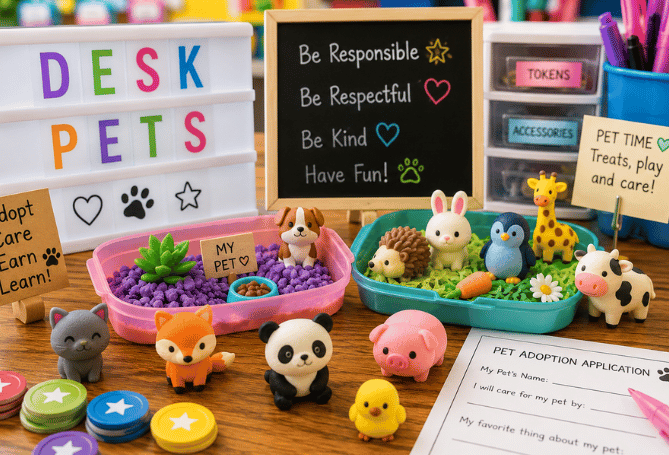
Desk pets are miniature animal erasers or figures that students adopt, keep in small habitats, and care for during the school day. Teachers often use them as incentives for positive behavior, completed work, smooth transitions, or classroom responsibilities.
A successful system needs more than a bag of cute erasers. Clear rules, scheduled play periods, simple storage, and fair earning criteria keep the activity enjoyable without letting it interrupt instruction.
| Desk pets | Practical answer |
| Best suited for | Elementary and upper-elementary classrooms |
| Basic supplies | Mini animal erasers, small containers, labels, tokens, and accessories |
| Main uses | Rewards, classroom management, writing, math, science, and imaginative play |
| Common risk | Students handling pets during instruction |
| Best safeguard | Fixed rules and designated pet time |
| Setup difficulty | Low when the system starts small |
What Are Desk Pets?
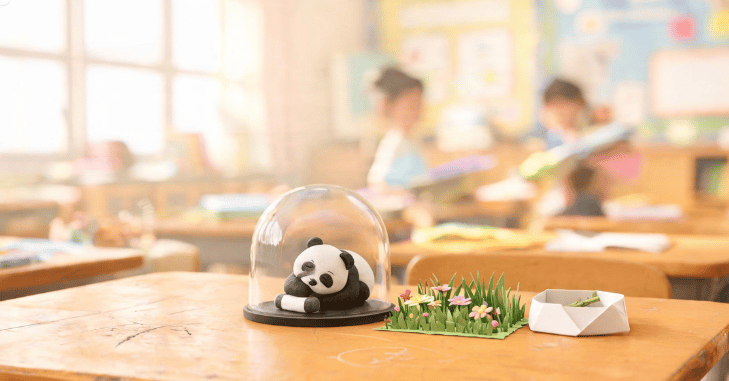
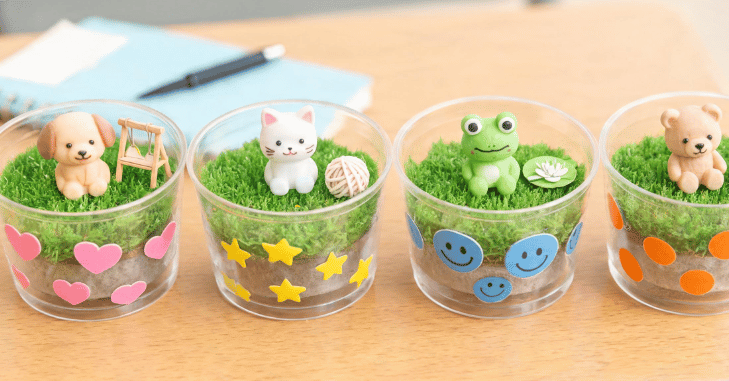
Desk pets are small, nonliving classroom companions, usually shaped like animals. Students may name them, create habitats, collect accessories, and use classroom currencies to purchase food or toys for them. Teachers commonly introduce them through a pretend adoption center.
Each student selects or earns a creature, completes an application, and agrees to follow the class rules. The concept gained attention as an affordable alternative to large prize boxes. One account traces the idea to teacher Marissa Begay, who began using inexpensive mini erasers after finding that buying regular erasers for hundreds of students was not sustainable.
Unlike a live classroom animal, these companions need no food, cage cleaning, holiday care, or allergy planning. They can still support imagination, responsibility, and a sense of ownership.
Why Teachers Use Desk Pets?
The strongest reason to use them is simple: students often find them motivating.
Teachers can connect the system to specific, observable actions, such as the following:
- Starting work promptly
- Completing an assignment
- Making a quiet transition
- Cooperating with a partner
- Keeping a workspace organized
- Showing kindness
- Meeting a personal learning goal
This makes the reward more flexible than a one-time prize. A student may earn a pet first, then continue working toward a habitat, food item, toy, or companion. Classroom examples also show that the figures can support lessons, transitions, brain breaks, manipulatives, behavior routines, and desk organization.
They should not become the only source of student motivation. Some children will care deeply about collecting tiny animals, while others will not. Offering choices protects students who prefer another reward or privilege.
How to Set Up Desk Pets in 10 Steps
Decide What Students Will Earn
Choose the purpose before buying supplies. You might reward individual behavior, academic effort, group cooperation, or a mix of all three. Keep the criteria concrete. “Show good behavior” is vague. “Begin independent work within two minutes” is easier for students to understand.
Start With A Small Supply Kit
You do not need an elaborate classroom store. Begin with:
- One miniature animal per student
- A few spare animals
- Small labeled containers
- Paper tokens or a punch card
- Several low-cost accessories
- One storage bin
Expanding slowly helps you learn what your class can manage.
Establish Three Or Four Firm Rules
Too many rules are hard to remember. A practical starting set is
- Pets stay in their homes during instruction.
- Students do not touch another person’s pet.
- Pets come out only during approved times.
- Habitats must leave enough space for schoolwork.
Similar rules appear across experienced teachers’ classroom systems. They focus on storage, permission, respect, and preventing distraction.
Explain How Pets And Accessories Are Earned
Tell students exactly which actions earn tokens, points, or classroom money. You might award one token for a smooth transition, two for meeting a weekly goal, or a bonus for helping the class. Avoid changing prices or criteria without warning. A visible price list can prevent repeated questions.
Hold An Adoption day.
Turn the introduction into a learning activity. Students can complete a short application explaining the following:
- Which animal do they want
- What will they name it
- How will they care for it
- Why are they ready to adopt
This can double as a persuasive or descriptive writing practice. Adoption applications and pet introductions are often used to build writing and speaking activities around the reward system.
Give Each Pet A Defined Home
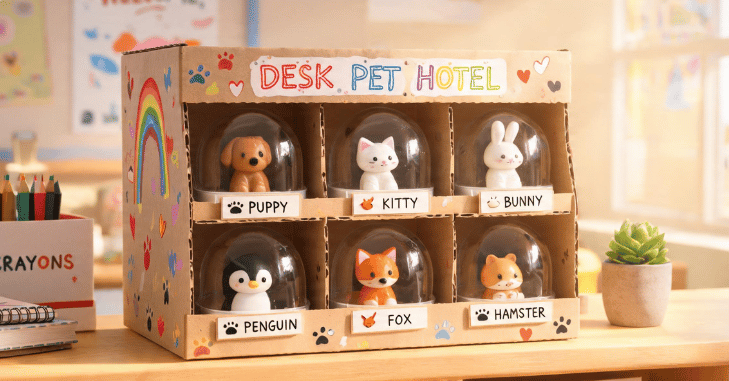
A desk companion needs a boundary. Use a small container, adhesive pocket, marked square, or central shelf. One teacher recommends assigning a clear square on the corner of each desk. Keeping the habitat inside that area limits clutter and protects the student’s workspace. Students who find the figure too distracting can keep it in a class “zoo” or pet hotel instead.
Schedule Pet Time
Do not let students decide when the animals come out.
Good options include:
- Morning arrival
- Friday classroom-store time
- Indoor recess
- A short, earned break
- The final minutes of the day
- A teacher read-aloud period
A predictable schedule reduces interruptions such as “Can we play with them now?”
Create A Neutral Time-Out Procedure
The consequences should be calm and predictable. A distracting companion can visit the pet sitter, veterinary clinic, daycare, or zoo for the rest of the lesson. Present this as a reset rather than a public punishment. The student gets another opportunity after demonstrating readiness. Teachers using these systems often designate a separate location for figures that become distracting.
Plan End-Of-Day Storage
Tiny erasers disappear easily. Decide whether each student keeps the pet in a labeled container, places it in a class bin, or leaves it in a central habitat. A shared pet hotel near the door can make cleanup part of the dismissal routine.
Review the system after two weeks.
Ask three questions:
- Are transitions improving?
- Are pets interrupting lessons?
- Are rewards being distributed fairly?
Keep what works and simplify what does not. You may need fewer accessories, shorter play periods, or a central zoo instead of individual desk habitats.
Desk Pet Rules That Prevent Distraction
A reward stops helping when students handle it throughout a lesson. Prevention works better than repeated correction. Teach the procedure as carefully as any other classroom routine. Model what students should do when the pet is stored, when it may come out, and how the cleanup should look.
You can also set limits on possessions. For example, each desk might hold one animal, two food pieces, and one toy. Everything else stays in the student’s labeled container. Some teachers allow habitat construction only during morning work, a weekly class store, or another scheduled period. This satisfies students’ interest without competing with direct teaching.
Learning Activities Beyond Behavior Rewards
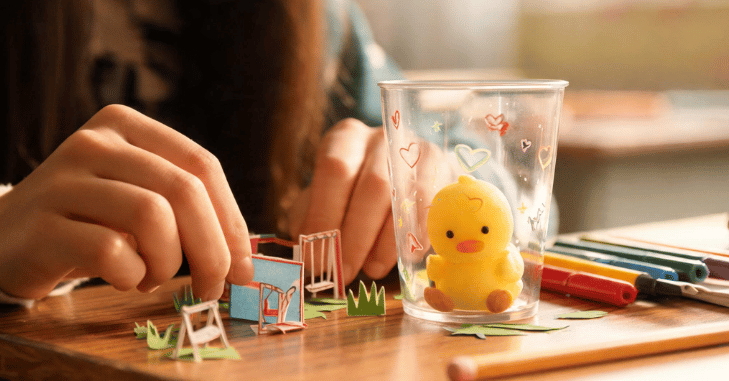
These companions can become teaching tools instead of remaining decorative prizes.
Thinkomics focuses on practical education and student growth, so the system fits naturally beside student learning guides.
Creative writing
Students can write:
- Adoption applications
- Character profiles
- Diary entries
- Adventure stories
- Care instructions
- Persuasive letters
A pet introduction can also become a brief speaking activity.
Math
Use the figures for:
- Sorting and classification
- Addition and subtraction stories
- Multiplication groups
- Graphing favorite animals
- Measuring habitats
- Classroom-store budgeting
Science
Students can design a habitat based on a real species. Ask them to consider shelter, climate, food, and environmental features. The model is imaginary, but the research can be factual.
Social And Emotional Learning
A teacher can use pretend care routines to discuss empathy, responsibility, personal space, and respect for another person’s belongings. These activities should support direct instruction rather than replace it.
Remote-Learning Adaptations
For online or blended classes, students can create paper companions, draw habitats, or photograph objects they already own. These extensions can accompany Thinkomics’ broader online-learning resources.
A Simple Weekly Reward Model
A complicated economy can create more work than it saves. Try this starter structure:
| Student action | Reward |
| Smooth class transition | 1 token |
| Completed personal goal | 2 tokens |
| Strong teamwork | 1 token |
| Pet adoption | 5 tokens |
| Food accessory | 2 tokens |
| Habitat accessory | 3 tokens |
| Second pet | 8 tokens |
Open the store once a week for ten minutes. This keeps purchasing from interrupting lessons. Do not remove tokens students have already earned unless that consequence was clearly stated in advance. A separate pet-sitter procedure is often easier to apply fairly.
Possible Drawbacks
The system is not right for every teacher or class.
Potential problems include the following:
- Lost or traded pieces
- Arguments about rare animals
- Students touching pets during lessons
- Unequal access to rewards
- Extra teacher spending
- Desk clutter
- Students who dislike the theme
You can reduce these problems by using identical starting pets, limiting trades, supplying classroom materials yourself, and providing alternative rewards. Avoid linking every reward to perfect compliance. Students with different learning, sensory, or behavioral needs may require personalized goals. Fairness does not always mean every child has the same target.
Conclusion
Desk pets are far more than colorful classroom decorations. When paired with clear expectations, consistent routines, and meaningful rewards, they can encourage positive behavior, strengthen student responsibility, and make every day learning more engaging. Whether you use them to motivate students, support creative writing, reinforce math concepts, or build social skills, the success of a desk pets system depends on keeping it simple, fair, and connected to your classroom goals.
Start with a few basic supplies, establish easy-to-follow rules, and expand the system only after students understand the expectations. With thoughtful planning, desk pets can become an enjoyable classroom tool that promotes learning, responsibility, and a positive classroom culture throughout the school year.
Apart from that, if you want to know about the article “Emotion Chart,” then please visit our Education Category.
Frequently Asked Questions About Desk
Most are miniature animal erasers, although teachers may use plastic figures, pom-poms, paper characters, or small toys.
They are most common in elementary classrooms. Some upper-elementary students also enjoy habitat design, collecting, and classroom-economy activities. A fifth-grade teacher reported a strong interest after initially expecting the class to be too old for the idea.
Costs depend on class size and the number of accessories. The cheapest approach is to begin with one bulk set, homemade paper currency, and recycled habitat containers. Avoid buying a large inventory before seeing how students respond.
Yes. They are most likely to distract students when there is no clear storage boundary or approved play time. Firm procedures and a central pet hotel can control the problem.
That is optional. Keeping them at school reduces forgotten or lost items. A teacher who allows take-home visits should explain when pets return and whether the school will replace missing pieces.
No. Teachers also use them for writing, speaking, math, science, imaginative play, transitions, and classroom organization.
Yes. Participation should not be compulsory. Offer another small privilege, collectible, class job, or goal-based reward for students who are not interested.
The Bottom Line
Desk pets work best as a small, structured part of a wider classroom plan. They can encourage positive routines, spark creative work, and make ordinary learning activities feel more personal. Start with one pet per student, a short rule list, fixed play periods, and simple storage. Watch how the class responds before adding a store, detailed habitats, or more accessories. The creatures may be tiny, but the procedures around them should be clear